Land Registry Update 2026: New Rules for Property Registration in Tamil Nadu
If you are planning to buy or sell property in Tamil Nadu or anywhere in India in 2026, there is one major update you cannot afford to miss. The government has introduced sweeping changes to the land registration system — making it more digital, more secure, and far more transparent than before.
Land Registry Update 2026, Whether you are a first-time homebuyer, a property investor, or a legal professional, understanding these new land registry rules is essential. In this guide, we break down everything you need to know — from mandatory documents to how TNREGINET fits into India’s digital property future.
What Is the Land Registry Update 2026?
The Land Registry Update 2026 is a nationwide reform of India’s property registration system. The central goal is to eliminate fraud, reduce paper dependency, and create a seamless digital experience for property buyers and sellers across all states — including Tamil Nadu.
Key objectives of the Land Registry Update 2026 include:
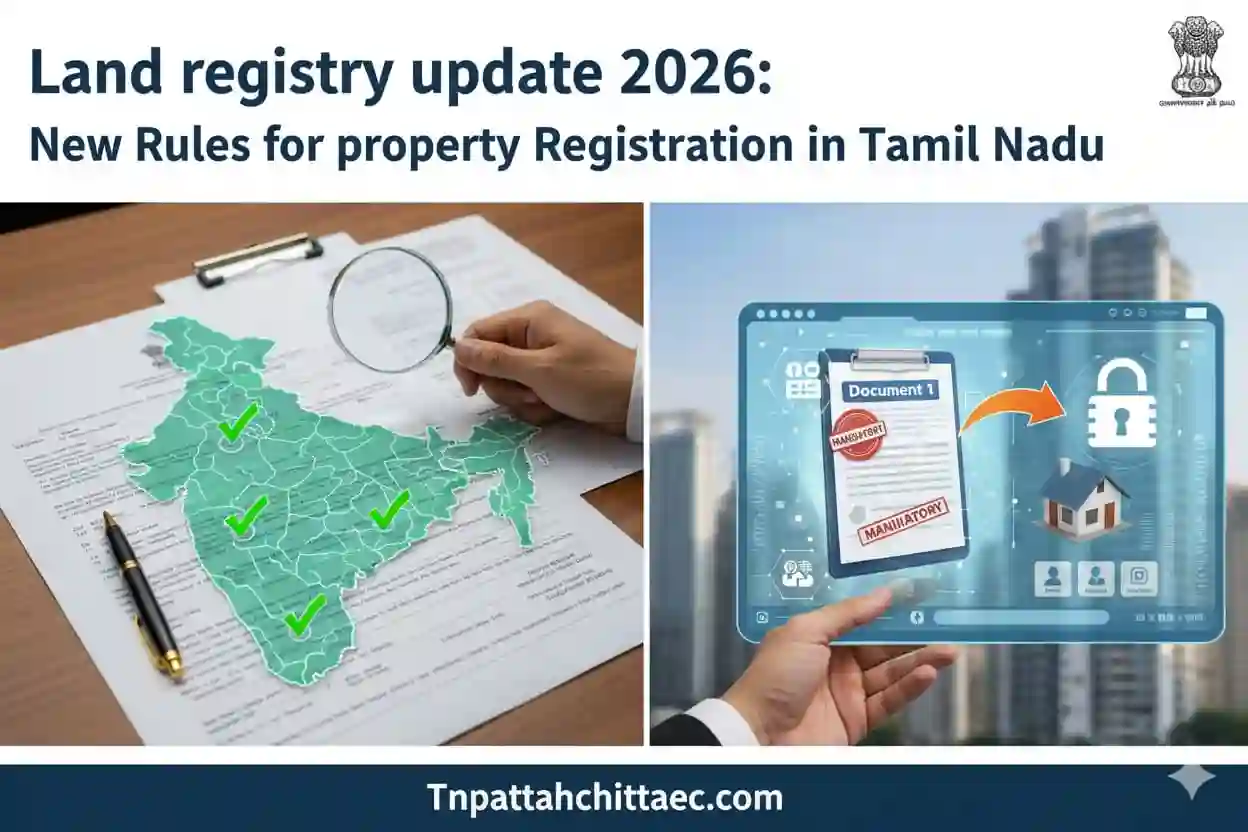
5 Major Changes Under Land Registry Rules 2026
1. Mandatory Identity Verification — Aadhaar + PAN
Both the buyer and seller must now submit valid identity documents at the time of property registration. Aadhaar card and PAN card are compulsory. In states like Uttar Pradesh, biometric verification using fingerprints or iris scans has already been introduced. Tamil Nadu is expected to follow soon through the TNREGINET portal.
What this means for you:
Always keep your Aadhaar and PAN ready before visiting any Sub-Registrar Office (SRO) in Tamil Nadu.
2. Digital Land Records Are Now Mandatory
Complete and accurate property records — including survey number, Patta/Chitta details, Khasra-Khatauni number, and exact boundary details — must be submitted digitally at the time of registration.
Tamil Nadu users can verify and download these records directly from the TNREGINET portal at tnreginet.gov.in.
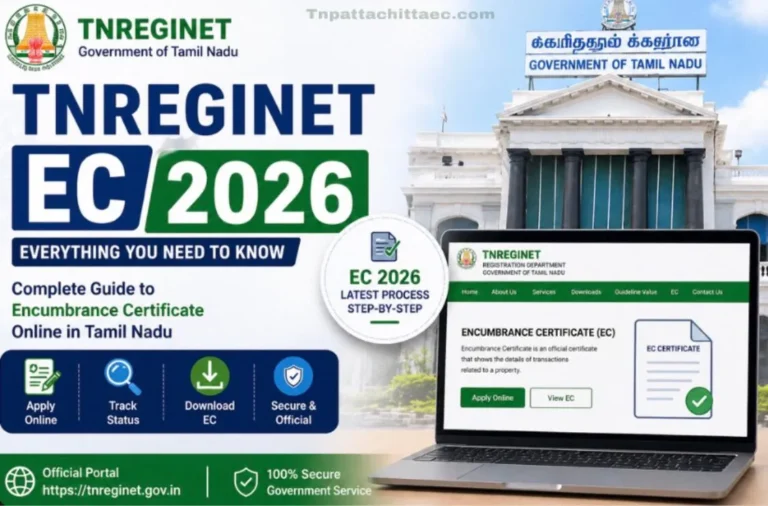
3. Encumbrance Certificate (EC) Verification Is Non-Negotiable
An Encumbrance Certificate (EC) proves that a property is free from all legal and financial liabilities. Under the 2026 rules, EC submission is now a required step before any property transfer is approved.
On TNREGINET, you can view and download your EC online in minutes — no office visit required.
Steps to get EC on TNREGINET:
- Visit tnreginet.gov.in
- Login and navigate to Services → Encumbrance Certificate
- Enter district, taluk, SRO, and survey number
- Click Submit → Download PDF
4. Stamp Duty Payment Must Be Verified Online
Proof of stamp duty payment is now mandatory at registration. Stamp duty is calculated based on the TNREGINET Guideline Value, which is the government-approved minimum value for any land or building.
| Property Type | Stamp Duty (Tamil Nadu) |
|---|---|
| Sale Deed | 7% of guideline value |
| Gift Deed | 1% (max ₹25,000) |
| Mortgage Deed | 1% (max ₹40,000) |
| Lease Agreement | Varies by term |
You can calculate stamp duty instantly using the Stamp Duty Calculator on TNREGINET.
5. Fraud Prevention Through GIS Mapping & Digital Records
States across India are integrating GIS (Geographic Information System) mapping with land records. This allows buyers to visually verify exact plot boundaries and confirm land area through satellite imagery — making it far harder for fraudsters to sell the same property twice.
How TNREGINET Helps You Stay Compliant in 2026
Tamil Nadu’s TNREGINET portal is already ahead of many states in India when it comes to digital land services. Here is what you can do on TNREGINET right now:
| Service | Available on TNREGINET? |
|---|---|
| EC View & Download | ✅ Yes |
| Guideline Value Check | ✅ Yes |
| Stamp Duty Calculation | ✅ Yes |
| Property Registration | ✅ Yes |
| Patta Chitta Verification | ✅ Via e-Services Portal |
| Building Value Calculation | ✅ Yes |
| Marriage/Birth/Death Certificates | ✅ Yes |
| Online SRO Appointment | ✅ Yes |
Documents Required for Property Registration in Tamil Nadu 2026
Under the updated rules, the following documents are essential:
- Aadhaar Card — identity proof for buyer and seller
- PAN Card — mandatory for financial transparency
- Encumbrance Certificate (EC) — downloaded from TNREGINET
- Sale Deed / Agreement — drafted and signed
- Patta / Chitta / A-Register extract — from Tamil Nadu e-Services portal
- Stamp Duty Payment Receipt — paid online
- Property Tax Receipts — latest payment proof
Tips for Tamil Nadu Property Buyers in 2026
FAQs | Land Registry Update 2026
Q: Is EC mandatory for all property registrations in Tamil Nadu in 2026?
Yes. An Encumbrance Certificate is a key document required before any property transfer is approved. You can download it for free from TNREGINET.
Q: Has Tamil Nadu introduced biometric verification for property registration?
Not yet mandated statewide, but given national trends, it is expected to roll out through TNREGINET in 2026–2027. Always check the latest updates on tnreginet.gov.in.
Q: Where can I check the Guideline Value for my property in Tamil Nadu?
Visit tnreginet.gov.in → Services → Guideline Value → Enter your district and taluk details.
Q: What if my Patta or Chitta details are wrong?
Apply for correction through the Tamil Nadu e-Services portal (eservices.tn.gov.in). Ensure records are updated before initiating registration.
Q: Can I register property online without visiting the SRO?
Most steps can be completed online on TNREGINET, but the final document execution still requires a physical visit to the Sub-Registrar Office for biometric and legal verification.
Conclusion
The Land Registry Update 2026 is a landmark reform that benefits every property buyer, seller, and investor in India. For Tamil Nadu residents, TNREGINET is your one-stop digital gateway to stay fully compliant — from checking EC online and verifying guideline values to calculating stamp duty and booking SRO appointments.
Stay ahead of the changes, keep your documents ready, and use TNREGINET to make your property journey smooth, legal, and fraud-free in 2026.
For more guides on TNREGINET, Patta Chitta, EC View, and Tamil Nadu land records, visit tnpattachittaec.com — your trusted independent resource for Tamil Nadu property services.