
Encumbrance Certificate TNREGINET – View & Download EC Online
Checking property legality in Tamil Nadu is no longer a complicated or time-consuming task. With the TNREGINET portal, citizens can easily view and download Encumbrance Certificate (EC) online from anywhere.
Whether you are buying property, applying for a home loan, or verifying ownership history, the Encumbrance Certificate TNREGINET service ensures transparency, accuracy, and legal safety.
This guide explains everything you need to know about EC online Tamil Nadu, from meaning and benefits to step-by-step viewing, downloading, charges, and common issues—written in a 100% human, clear, and practical tone.
Encumbrance Certificate TNREGINET
Encumbrance Certificate TNREGINET is an official online service provided by the Registration Department – Tamil Nadu, allowing users to view and download EC details digitally.
The portal records all registered transactions related to a property, such as sale deeds, mortgages, leases, and releases.
Using tnreginet gov in encumbrance certificate online, property buyers and owners can confirm whether the land or a building is free from legal dues or liabilities.
An Encumbrance Certificate (EC), also known as a Villangam Certificate in Tamil, is an official document issued by the Tamil Nadu Registration Department confirming that a property is free from any legal, financial, or monetary liabilities (encumbrances) like mortgages, liens, or lawsuits during a specified period. It’s essential for property transactions, loans, or sales to prove clear title.
Issued through the TNREGINET portal (tnreginet.gov.in), the online process has streamlined access since its digitization, reducing paperwork and wait times.
Benefits of Obtaining an Encumbrance Certificate
Getting an Encumbrance Certificate Tamil Nadu offers several advantages:
Builds trust with banks and authorities
What is an Encumbrance Certificate (EC)?
An Encumbrance Certificate (EC) is a legal document that shows whether a property has any financial or legal liabilities during a specific period. It confirms if the property is free from loans, mortgages, court cases, or other claims.
Encumbrance Certificate Meaning
- English: Legal record of property transactions
- Tamil: சுமைச் சான்று (Encumbrance Certificate Tamil meaning)
- Urdu: جائیداد پر کسی بھی قانونی یا مالی بوجھ کا ریکارڈ
- Encumbrance Certificate TNREGINET
The EC is commonly required for:
- Property purchase or sale
- Bank loans
- Legal verification
- Government approvals
EC View Online Process
The EC online process through TNREGINET allows users to:
- Search property details digitally
- View registered transactions
- Check encumbrance certificate status
- Avoid visiting sub-registrar offices
This system is similar in purpose to services like encumbrance certificate Telangana, encumbrance certificate AP, encumbrance certificate Kerala, and encumbrance certificate Punjab, but TNREGINET is one of the most user-friendly portals in India.
View EC / Download Certificate
Using encumbrance certificate TNREGINET online, users can:
- View EC in English or Tamil
- Download EC as a PDF
- Use EC for legal and banking purposes
Step by Step Guide to View EC Online on TNREGINET
Follow these steps to use tnreginet online Tamil Nadu encumbrance certificate service:
- Visit the official TNREGINET portal
- Register or log in using your credentials
- Select Encumbrance Certificate
- Choose Search by Property Details
- Enter:
- District
- Sub-Registrar Office
- Survey Number / Document Number
- Period (from–to year)
- Submit the request
- View EC details on screen
- Download EC PDF if required
This process supports online EC view Tamilnadu English and Tamil language options.
EC (Encumbrance Certificate) Online View on TNREGINET
The EC online TNREGINET feature provides real-time access to property transaction history. Unlike older offline methods, online EC:
- Saves time
- Reduces errors
- Offers verified government data
- Is legally valid
This digital system works similarly to portals such as IGRSUP, IG Login, and land record platforms like Bhulekh Odisha, but is specifically designed for Tamil Nadu.
Eligibility Criteria and Types of Encumbrance Certificates
Eligibility Criteria
An Encumbrance Certificate TNREGINET (EC) in Tamil Nadu can be applied for by any individual or organization with a legitimate legal interest in a property registered in Tamil Nadu. The TNREGINET system is designed to be inclusive and does not impose unnecessary restrictions.
Eligible applicants include:
- Property owners
- Prospective buyers
- Legal heirs
- Banks and financial institutions
- Lawyers and authorized representatives
There are no residency, income, or citizenship limitations. However, applicants must provide accurate and verifiable property identifiers, such as the survey number, document number, or registration reference.
NRIs can also apply for an encumbrance certificate online through TNREGINET, using Aadhaar-based authentication or e-Sign facilities, subject to valid linkage and verification.
Types of Encumbrance Certificates on TNREGINET
The Registration Department – Tamil Nadu issues different types of Encumbrance Certificates depending on the transaction history of the property. Understanding these forms is essential for property verification and legal safety.
| Form | What It Shows | When It Is Used | Key Details |
| Form 15 EC | Displays all registered property transactions such as sales, mortgages, leases, and releases | Required during property purchase, sale, and bank loan approval | Includes document numbers, registration dates, parties involved, and court attachment indicators |
| Form 16 (Nil EC) | Confirms that no transactions or financial liabilities exist during the selected period | Used when the property has no recorded activity, often for older or inherited land | Issued when no entries are found; should always be cross-verified with Patta records |
| Form 17 EC | Shows loans, mortgages, and legal restrictions on the property | Used by banks and legal professionals for risk assessment | Highlights outstanding financial charges and legal claims |
Documents Required
To apply for an Encumbrance Certificate Tamil Nadu online or offline, the following documents may be required depending on the mode of application.
| Document | Purpose | Notes |
| Sale Deed / Title Deed | Confirms ownership details and property boundaries | Attested copy is required |
| Patta / Chitta | Provides land classification and survey number | Mandatory for rural and agricultural properties |
| Identity Proof (Aadhaar / PAN / Voter ID) | Verifies applicant identity | Self-attested copy is sufficient |
| Previous Encumbrance Certificate (if available) | Helps track earlier transaction history | Required for extended period verification |
| Power of Attorney (if applicable) | Authorizes a third party to apply on behalf of the owner | Must be legally notarized |
| Form 22 (Offline Application) | Official EC application form | Available at the Sub-Registrar Office counter |
Expert Tip
Even when a Nil Encumbrance Certificate (Form 16) is issued, it is strongly recommended to cross-check property ownership using Patta, Chitta, and TNREGINET registration records to ensure complete legal clarity.
How to Download and Use the EC Once Viewed
After viewing EC:
- Click Download EC
- Save Encumbrance Certificate TNREGINET PDF
- Print if required
- Submit to banks, courts, or registration offices
The encumbrance certificate download Tamilnadu file is accepted for official use.
Online Application Process for Encumbrance Certificate
The encumbrance certificate online TNREGINET application involves:
- Digital submission
- Automated verification
- Online fee payment
- Downloadable EC PDF
This process eliminates manual delays and office visits.
The TNREGINET portal offers a user-friendly, end-to-end digital service. New users must register first.
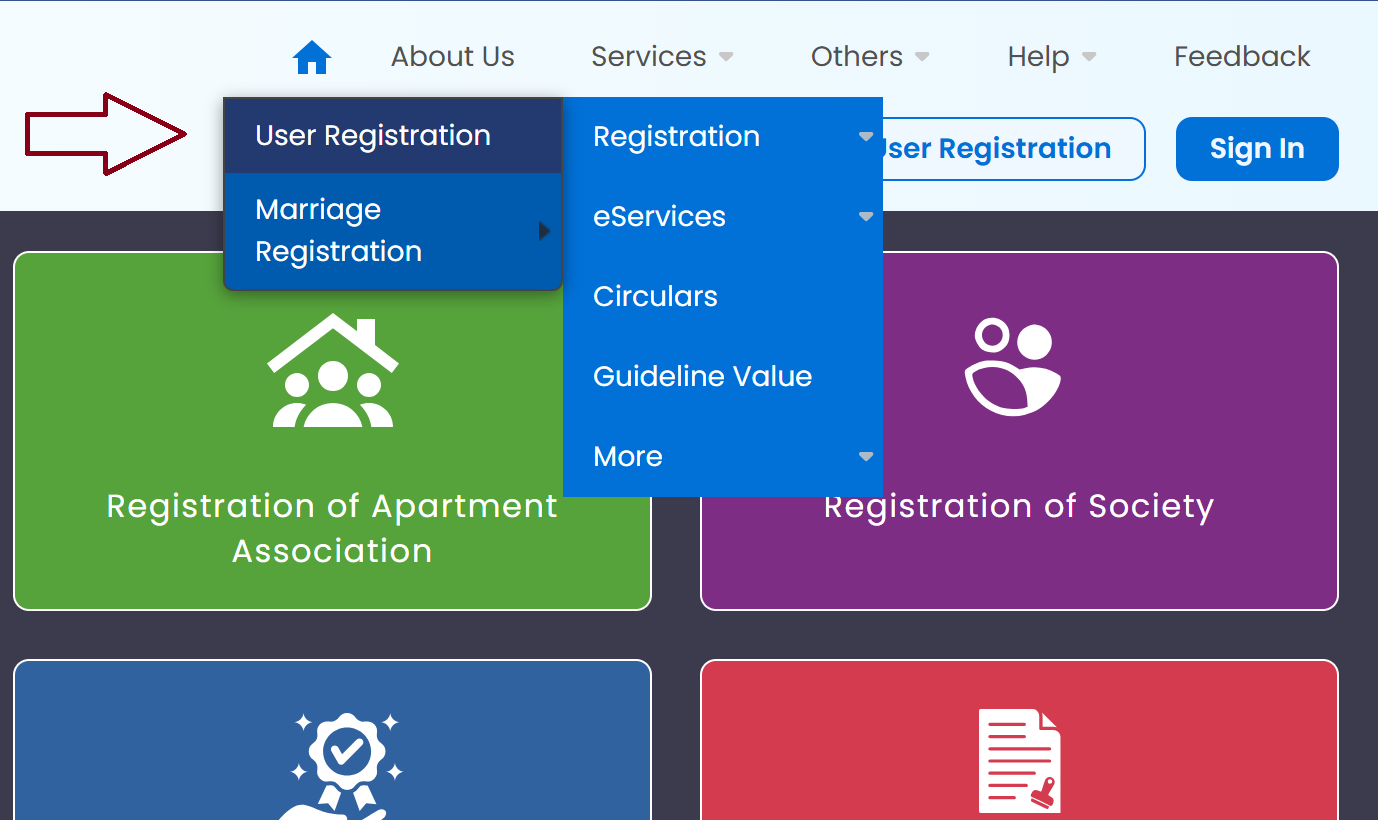
- Portal Access and Registration: Visit tnreginet.gov.in. Click on User registration under the Registration option on the main Menu. Enter username, password, address, ID number (Aadhaar/PAN/driving license), and contact details. An OTP will be sent to your mobile, verify it to complete setup
- Account Verification: Check your registered email for a confirmation link from TNREGINET and click to activate. This step ensures security against fraud.
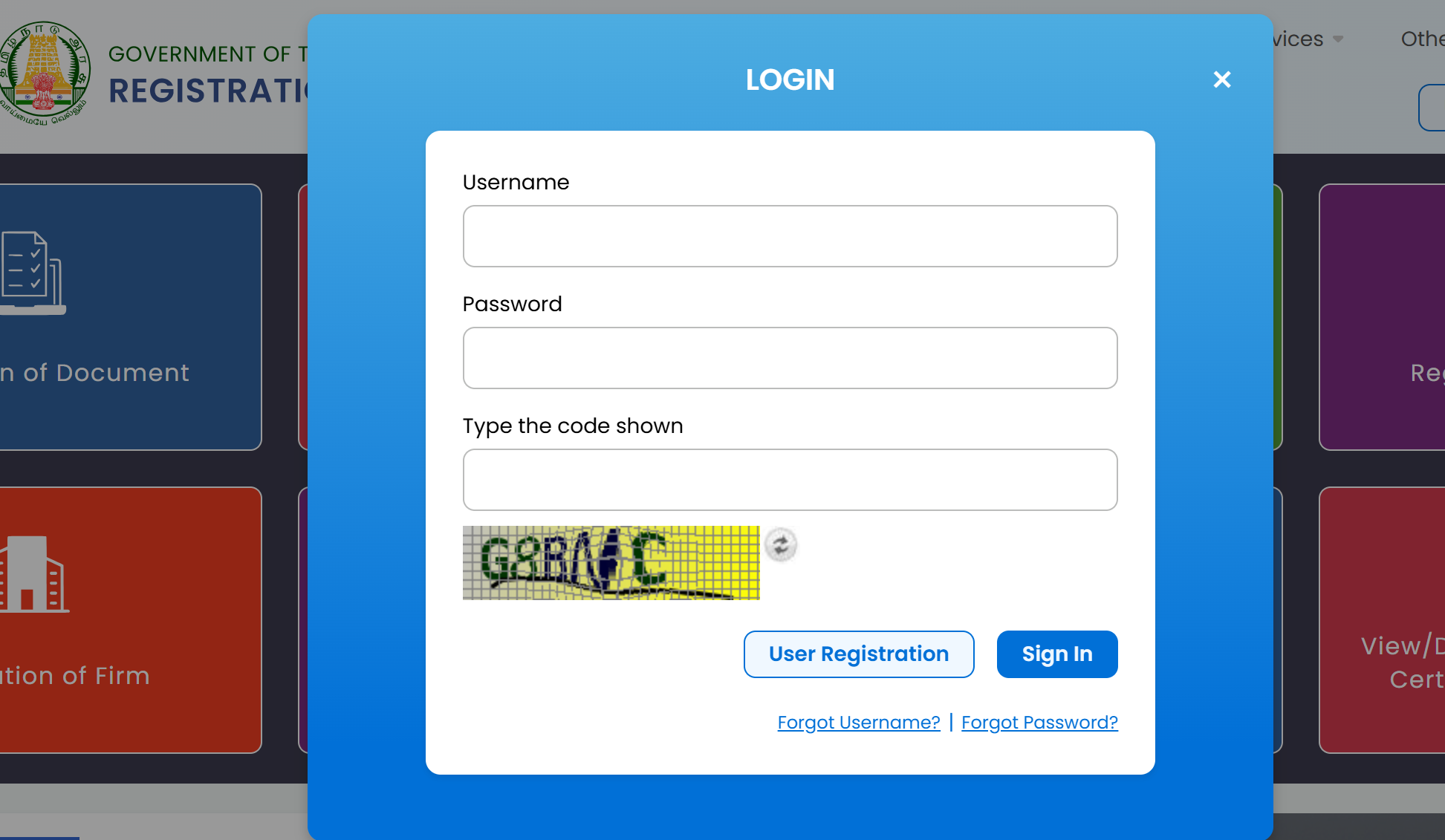
- Login and Navigation: Log in with credentials.
- From the homepage, select “E-Services” > “Encumbrance Certificate” > “Search and Apply EC.”
- Enter Property Details: Fill in the form:
- Location: Zone, district, SRO.
- Period: Start and end dates (e.g., 01/01/2015 to 31/12/2025).
- Survey/House: Village, survey/subdivision number, plot/flat/door number, ward/block, boundaries.
- Additional: Old survey number, declared owner, any known document numbers. Solve the CAPTCHA and click “Search” to preview related records.
- Review and Apply: Scan the displayed transaction history. If satisfied, click “Apply Online.”
- Personal and Payment Details: Input your name and contact info. Review the fee breakdown, then proceed to e-payment.
- Make Payment: Select payment mode (net banking/UPI/card), choose a bank, and complete the transaction. You will receive a CIN (Challan Identification Number), bank reference, and transaction ID, save these for tracking.
- Submission and Approval: The application goes to the SRO for verification (automated for most cases). An SMS alert arrives upon approval, and the digitally signed EC (with QR code on each page) is emailed/available in your dashboard.
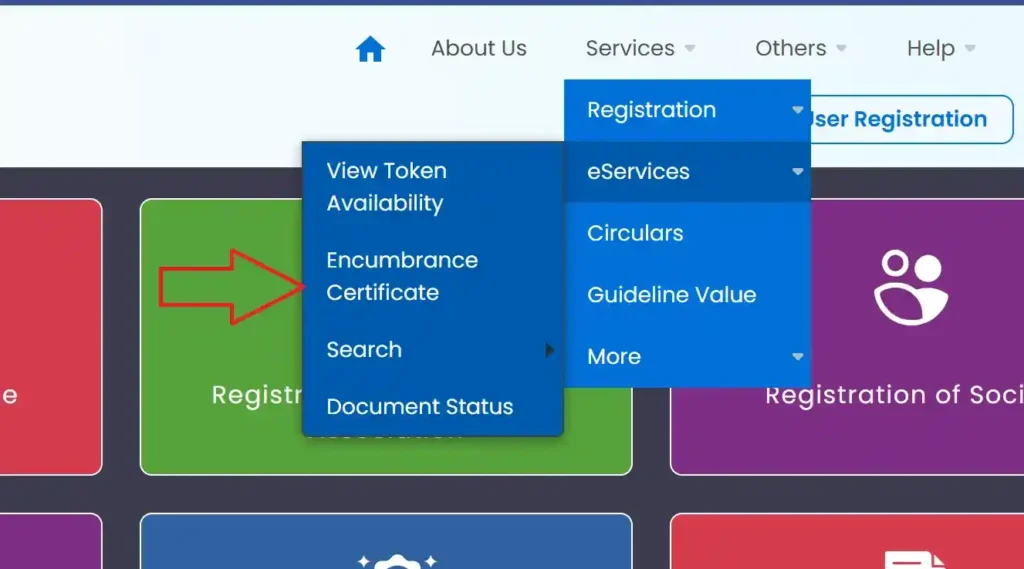
- Download and View EC: Go to “E-Services” > “Encumbrance Certificate” > “Request List.” Download the PDF, it’s valid for official use without printing >Encumbrance Certificate TNREGINET.
Pro Tip: Use the “Document Wise” search option if you have a specific deed number for quicker results. For family-linked properties, link accounts via the portal for bulk applications.
Offline Application Process for Encumbrance Certificate
If online isn’t feasible (e.g., no internet or complex cases), visit your local SRO:
- Download/print Form 22 from the portal or collect it at the office.
- Fill details: Property info, period, and applicant data.
- Submit with documents (title deed, ID proof) and pay fees at the counter (cash/PoS up to Rs.1,000).
- Get an acknowledgment slip. The officer verifies and issues the EC.
Note: Offline is slower but useful for pre-1987 (non-computerized) records.
Fee Structure
- EC charges vary based on:
- Search period
- Number of years requested
Typically:
- First year: nominal fee
- Additional years: small incremental charge
Online payment is supported via net banking and cards.
| Sr. No | Fee Description | Amount (₹) |
|---|---|---|
| 1 | Application Fee | 1 |
| 2 | Search Fee for 1st Year | 30 |
| 3 | Search Fee for every additional year | 10 |
| 4 | Additional Fees for Computerized Period (from 1987) | 200 |
| 5 | Urgent EC in Non-Computerized Period | Double the required fee |
Processing Time and Validity
- Online: 5-7 working days (instant for simple searches; SRO review for others).
- Offline: 15-30 days (up to 4 days in computerized SROs).
- Validity: Lifetime for the covered period, but reapply for new dates. ECs are valid for 6 months for most transactions; banks may require fresher ones.
- Processing Time: Instant to a few hours (online)
- Validity: EC remains valid as long as no new transactions occur
Note: Track status via “Request List” on the portal using your transaction ID.
View and Download Encumbrance Certificate
Using TNREGINET: Easy Online Encumbrance Certificate Service, users can:
- View EC anytime
- Download EC multiple times
- Access verified government records
For quick access to existing ECs (ideal for pre-registered properties), here are the steps for viewing the EC:
- Go to the homepage, click on Sign in option, Enter username/password.
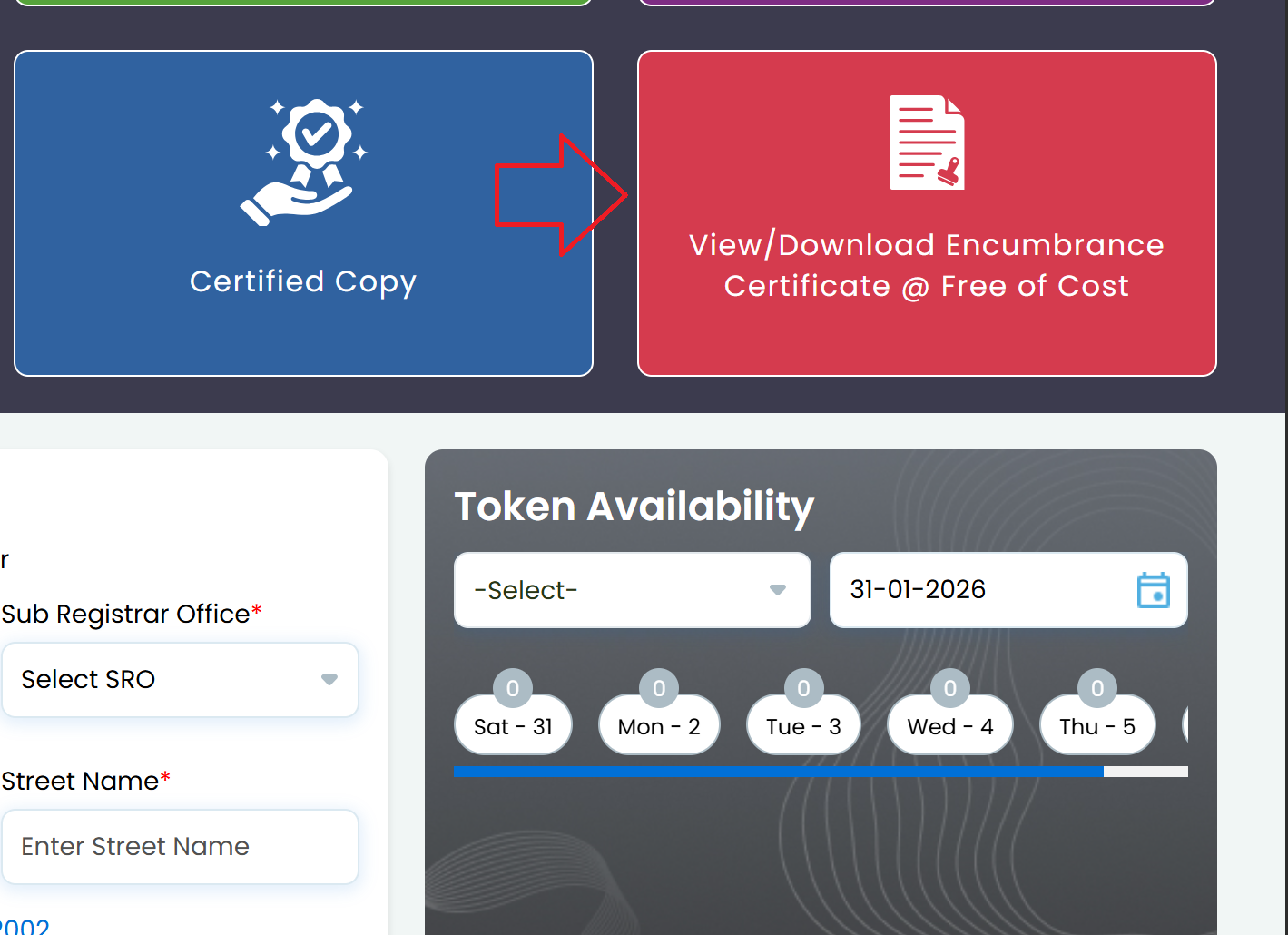
- From the Homepage, click on “View/Download Encumbrance Certificate”.
- Choose Search Mode: Opt for “Document Number” (if known) or “Survey Number” (for broader scans).
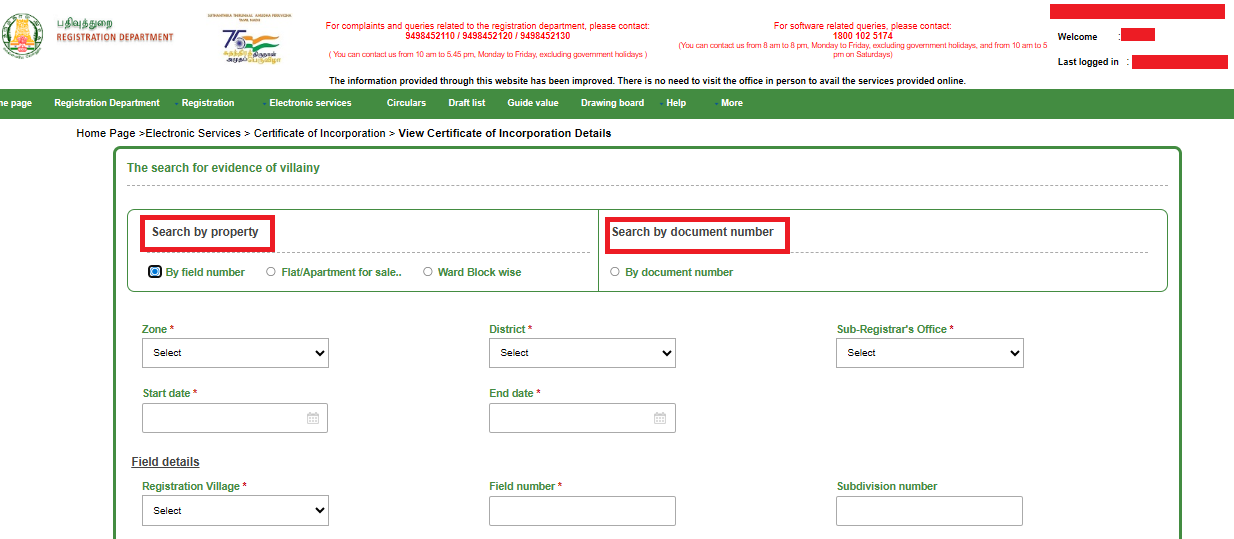
- Search by Document Number : Input registration district, document number (e.g., 1234/2025), book type (1 for sale deeds), year (2025), and date range. Click “Search”, results show deed abstracts instantly.
- Search by Property (Recommended for Unknown Deeds): Select zone (23 zones, e.g., Coimbatore South), district (38 options), taluk, village (dropdown populates post-taluk). Enter S.No. (e.g., 45/2A), S.S.No. (e.g., 1), start date (DD-MM-YYYY), end date. For urban flats, add T.S. No. (Town Survey) and old S.No. if subdivided.
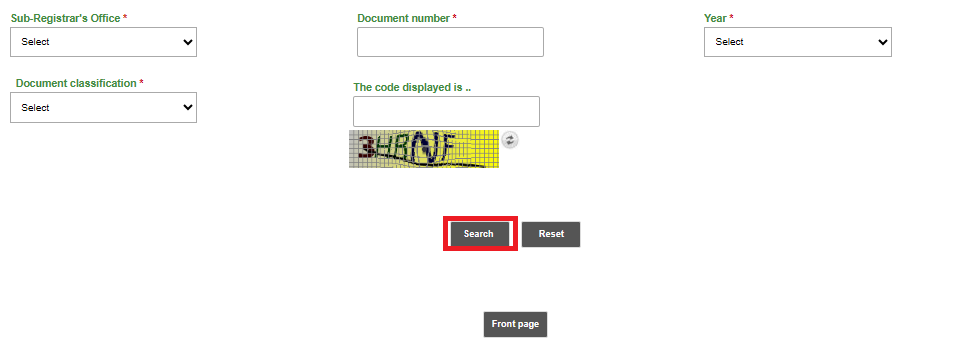
- Enter the distorted text (case-sensitive); audio alternative for visually impaired. Hit “Add” to queue details, multi-property searches supported up to 5 entries.
- Click “Search”. The system queries the IGR database (over 2 crore digitized deeds). Wait 10-60 seconds; progress bar indicates load.
- Select “Download EC” button, formats: PDF (default, A4 landscape), XML (for bulk), CSV (transaction export).
- Validation: Post-download, use “Verify Document” tool, upload PDF, auto-checks hash against IGR ledger (99.9% uptime).
- Retention: Files accessible in “My EC History” for 180 days; auto-archive to cloud.
Common Issues and Solutions
Issue: EC details not found
Solution: Recheck survey number and period
Issue: Language confusion
Solution: Switch to Online EC view Tamilnadu English
Issue: Status pending
Solution: Track encumbrance certificate status on TNREGINET
How the EC is Useful in Property Transactions
The Encumbrance Certificate is a critical document for:
- Buyers verifying ownership
- Sellers proving clear title
- Banks approving loans
- Lawyers handling disputes
In short, no EC = no safe property transaction.
Final Words
The Encumbrance Certificate TNREGINET service has transformed property verification in Tamil Nadu. With EC online viewing, downloading, status tracking, and PDF access, the TNREGINET portal ensures transparency, legal safety, and convenience.
Whether you are checking encumbrance certificate Tamil Nadu online, comparing with encumbrance certificate TS or AP, or simply securing your investment, TNREGINET EC online is the most reliable solution.