Update Patta Chitta in 2026 With or Without Mobile Number
If you own land in Tamil Nadu, you already know how much rides on one document. Your Patta Chitta is not just a paper. It is the government’s official record that you are the legal owner of that land. Whether you are in a village near Thanjavur, a town plot in Coimbatore’s Saravanampatti layout, or a small farm off the Trichy bypass road, this document protects you.
Update Patta Chitta. But what happens when your Patta Chitta is outdated? What if you bought land but the record still shows the old owner’s name? Or worse, you need to update it but you do not have a mobile number linked to your Aadhaar?
This guide answers all of that. Step by step.
What Is Patta Chitta and Why Does It Need Updating?
Patta Chitta is the combined land record document issued by the Tamil Nadu Revenue Department. In 2015, Update Patta Chitta the government merged two older documents: Patta (which proved ownership) and Chitta (which classified land type). Today, both details come in one digital extract.
The document shows:
You need to update this record after a property sale, gift deed, court order, or inheritance. If you recently bought land near Anna Salai in Chennai or inherited paddy fields off the Kumbakonam to Karaikal highway, the Patta still carries the previous owner’s name until you formally apply for a transfer.
Banks will not approve loans without an updated Patta. Sub-registrar offices in districts like Madurai, Salem, and Tiruvallur now mandate a valid Patta in the seller’s name before any property registration goes through.
The 2026 Update: What Changed?
The Tamil Nadu Revenue Department rolled out stricter verification in 2026. Here is what is new:
The STAR 3.0 system now aims for a fully paperless, faceless transfer process. Aadhaar-based OTP or biometric verification is mandatory for all digital transfers. This means when you try to view or verify your Patta Chitta online at eservices.tn.gov.in, the portal will ask for a mobile number to send you a One-Time Password.
DGPS (Differential Global Positioning System) surveys are now used for boundary mapping. This improves accuracy, especially for disputed plots along village roads, canal-side agricultural land, and patta lands near government poramboke stretches.
The New Land Registration Rules 2026 also made it compulsory to present original title documents during registration. No more photocopies alone.
Do You Really Need a Mobile Number to Update Patta Chitta?
Here is the honest answer: for the online process, yes. The eservices.tn.gov.in portal sends an OTP to your mobile number for every action, from viewing records to submitting a transfer application.
But if you do not have a mobile number, or if your number is not linked to Aadhaar, you still have options.
The offline route remains fully functional. You can walk into your nearest Taluk office or VAO (Village Administrative Officer) office and complete the process without ever touching a smartphone. The Revenue Department has not shut down physical counters.
You can also visit a Common Service Centre (CSC). Tamil Nadu has thousands of CSCs across the state, including in smaller blocks like Papanasam in Thanjavur district, Natham in Dindigul, and Tiruvaiyaru off the Grand Anaicut Canal road. Update Patta Chitta Operators at CSCs can process your Patta Chitta application on your behalf.
Online Method: Updating Patta Chitta at eservices.tn.gov.in
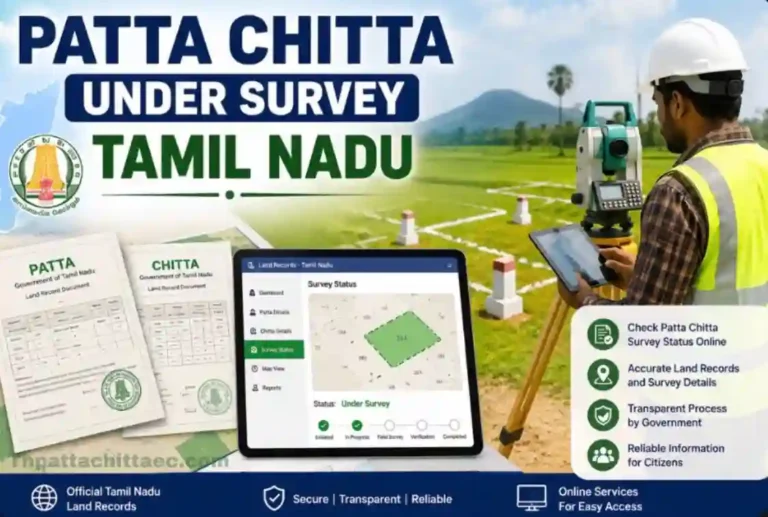
The official portal for land records in Tamil Nadu is eservices.tn.gov.in, maintained by the Commissionerate of Survey and Settlement.
Step 1: Go to eservices.tn.gov.in on your phone or computer.
Step 2: Click on “Apply Patta Transfer” from the land records services menu.
Step 3: Select your district, taluk, and village from the dropdown menus. If you are in Erode district’s Gobichettipalayam taluk, select accordingly. Same for Vellore, Namakkal, or Kanyakumari.
Step 4: Enter your survey number and subdivision number. You can find these on your original sale deed or the previous owner’s Patta.
Step 5: Upload the required documents. Scanned copies in PDF or JPEG format are accepted.
Step 6: Enter your mobile number. The portal sends an OTP to verify identity. This step is mandatory in 2026 due to anti-fraud measures.
Step 7: Submit the application. Note your Application ID. You will need it to track the status later.
You can check application status at any time by going to eservices.tn.gov.in and entering your Application ID with the captcha for Update Patta Chitta.
Processing typically takes 15 to 30 days if documents are in order.
Offline Method: Visiting the Taluk Office or VAO
If you cannot use the online portal, go to your local Taluk office. In most places, the Tahsildar’s office handles Patta transfers.
Here is what to bring:
Submit these documents at the counter. Staff will give you an acknowledgment slip with a reference number. Ask for it. Without it, tracking your application becomes harder. Please update Patta Chitta.
The Tahsildar or Deputy Tahsildar’s office in each district handles the verification. In Chennai, the Revenue Divisional Officer at Rajaji Bhavan near Besant Nagar handles several categories. In Coimbatore, the Collectorate office on Avanashi Road is the main point of contact for revenue matters.
Updating Patta Chitta After Inheritance
This is one of the most common reasons people visit revenue offices across Tamil Nadu, especially in agricultural districts like Thanjavur, Tiruvarur, and Nagapattinam where paddy and banana cultivation land passes through families.
When a landowner dies, the property does not automatically transfer in Patta records. You need to apply separately.
Documents needed for inheritance transfer:
If multiple heirs agree, a joint Patta can be applied for. If one heir wants sole ownership, a Registered Release Deed from other heirs is needed first.
After submitting the application online or at the Taluk office, the local VAO (Village Administrative Officer) will conduct a field visit and submit a report. Based on that, the Tahsildar approves or rejects the transfer.
Patta Chitta for Urban Land: TSLR Extract
If your property is in an urban area, you might not need a Patta Chitta in the traditional sense. Urban plots in Chennai’s T. Nagar, Coimbatore’s R.S. Puram, Madurai’s Goripalayam, or Tirunelveli’s Palayamkottai fall under the Town Survey Land Register (TSLR).
TSLR is the urban equivalent of Patta. The update process is similar but uses different fields. On the portal, look for “TSLR Extract” under the land records services.
You still need an OTP-based mobile number verification for the online route. For offline updates to TSLR records, visit the Town Survey office under the respective Municipal Corporation or Municipality office.
Fees for Patta Chitta Transfer in 2026
The official fee as per GO(Ms) No. 370 of the Revenue and Disaster Management Department is:
- Patta Transfer application at CSC: ₹60 per application
- F-Line measurement (rural areas): Varies by taluk
- TSLR update (urban areas): Charged separately at municipal offices
There is no fee for simply viewing or downloading your Patta Chitta online. That is free on the official portal.
Avoid paying money to middlemen or agents near Taluk office gates, especially in busy revenue hubs like Ambattur in Chennai, Villupuram town, and Karur. They often overcharge and delay your application.
Common Problems and How to Fix Them
Name mismatch: Your name on the Patta differs from your Aadhaar or sale deed. This happens often in older records. Visit the Tahsildar’s office with an affidavit and supporting documents to correct the name.
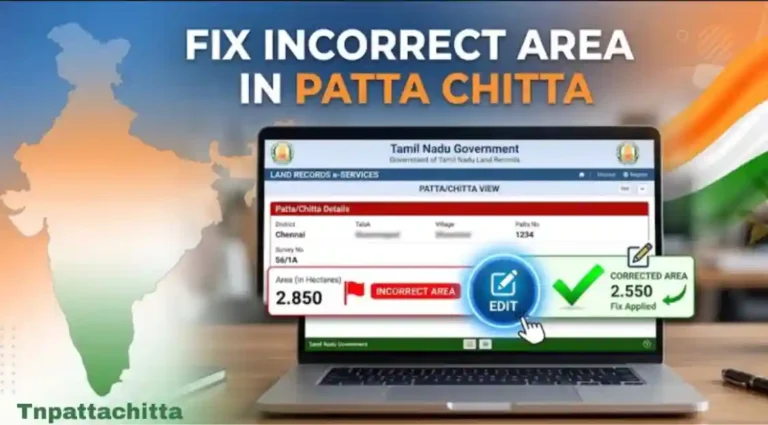
Wrong area: The land area in Patta does not match the sale deed. File a correction application with your FMB sketch, EC, and original deed at the revenue office.
Record not found online: Older village records from places like interior taluks in Dharmapuri or Ariyalur may not yet be fully digitized. Visit the Taluk office in person for those.
OTP not received: If you entered a mobile number that is not Aadhaar-linked, the portal may not verify it. Try using the offline method or visit a CSC where the operator handles it.
Application pending beyond 30 days: Track status online with your Application ID. If no movement for over 30 days, visit the Tahsildar’s office directly with your acknowledgment slip. You can also file a grievance at pgportal.gov.in or through the Tamil Nadu Chief Minister’s public grievance system.
Verifying Your Patta Chitta After Update
Once your Patta is updated, verify it through the official portal.
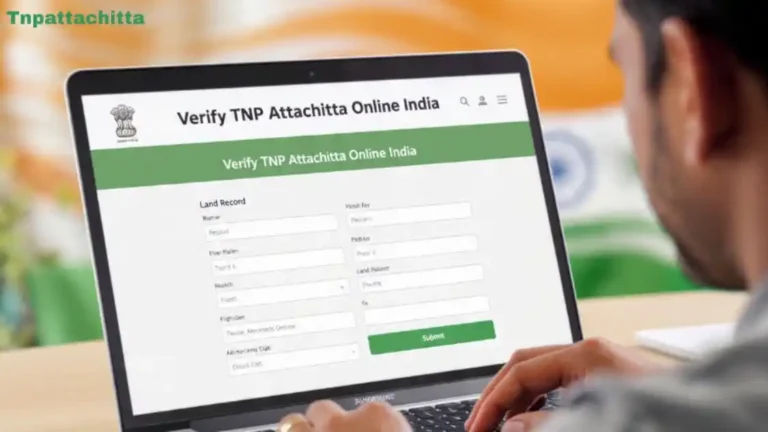
Go to eservices.tn.gov.in and select “Verify Patta / Chitta.” Enter the Reference Number printed on your updated document, your mobile number, and the OTP. The system will confirm whether the record matches the government database.
This verification step matters greatly if you are selling land. Buyers in Chennai, Madurai, and Tirupur often ask for a fresh online-verified Patta before signing any agreement. Banks processing home loans in Erode and Salem also run this check.
Do not share your Aadhaar details, mobile OTP, or personal information on any website other than eservices.tn.gov.in or tnesevai.tn.gov.in. Fake portals are common.
Update Patta Chitta With Mobile vs Without Mobile
| Step | With Mobile Number | Without Mobile Number |
|---|---|---|
| View Patta online | Yes, via OTP | No |
| Apply for transfer online | Yes, via OTP | No |
| Apply for transfer offline | Yes | Yes |
| Visit CSC | Yes | Yes, operator handles OTP |
| Document requirements | Same | Same |
| Processing time | 15 to 30 days | 15 to 30 days |
Final Word
Your Patta Chitta is your land’s identity card. Keeping it updated protects you from fraud, speeds up property sales, and makes bank loan approvals straightforward. The Tamil Nadu government has made the process faster through digital portals, but the offline route through Taluk offices and CSCs still works well for those without mobile access.
Whether you are in a village near the Palar river basin in Vellore, a coconut grove plot off Salem to Erode highway, or an apartment in Velachery, Update Patta Chitta Chennai, the process is the same. Update Patta Chitta. Get your documents ready, pick the method that suits you, and submit.
If you face issues, reach out to the Revenue Department at the district Collector’s office or raise a grievance online. The system has become more transparent, and most genuine applications go through without trouble.
This article is based on publicly available information from eservices.tn.gov.in and official notifications from the Tamil Nadu Revenue Department. For legally binding decisions, always rely on the official government portals and consult a qualified property lawyer.