
Cancel Fraudulent Patta Chitta Fast & Safely | 2026 Guide
You worked hard for your land. Then one day, a stranger claims it is theirs. They have a Patta Chitta in their name. You never sold it. You never signed anything. Welcome to one of Tamil Nadu’s most painful property crimes.
This guide will show you exactly how to cancel fraudulent Patta Chitta and protect what is yours.
What Is Patta Chitta and Why Does Fraud Happen?
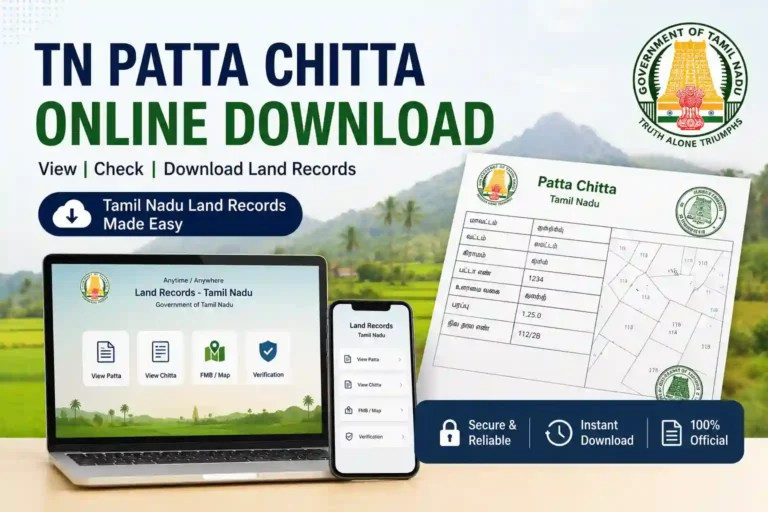
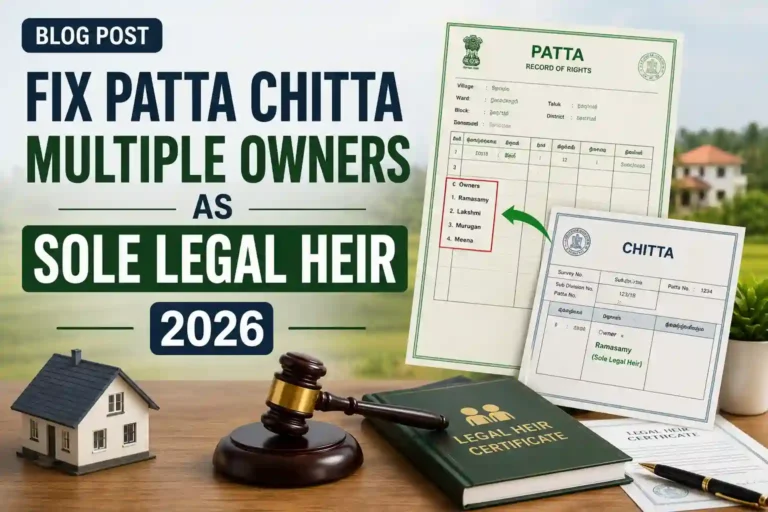
Patta is the official land ownership record maintained by the Tamil Nadu government. Chitta is the land revenue register showing ownership, area, and tax details. Together, they form your legal proof of land ownership.
Fraudsters target Patta Chitta records because land prices have skyrocketed. Areas near the Chennai Outer Ring Road, GST Road corridor, and fast-developing districts like Coimbatore, Madurai, and Tiruchirappalli see constant fraudulent transfers.
Corrupt officials, forged signatures, fake NOCs, and identity theft are the most common tools fraudsters use. Once a fraudulent transfer happens, acting fast is critical.
How to Spot a Fraudulent Patta Chitta
Before you move to cancel fraudulent Patta Chitta, confirm the fraud first.
Check these warning signs:
Your name no longer appears in the Patta records online. You receive a property tax notice addressed to someone else. A neighbour tells you strangers visited your land. You find your Survey Number linked to a different owner on the TNREGINET portal.
Visit tnpds.gov.in or eservices.tn.gov.in and search your Survey Number. If the records do not match your ownership details, you may already be a victim.
Keep screenshots and printouts of what you find. These become your first pieces of evidence.
Step 1: Gather All Your Original Documents
To cancel fraudulent Patta Chitta, you need to build a strong paper trail.
Collect these documents immediately:
Your original Sale Deed or Gift Deed registered at the Sub-Registrar Office. The Encumbrance Certificate (EC) showing no prior claims. Your old Patta Chitta copy issued in your name. Property tax receipts paid in your name. Survey Settlement Records (A-Register extract) from the Village Administrative Office (VAO).
If your land is near areas like Anna Nagar, T. Nagar, Velachery, Tambaram, or Chrompet in Chennai, get the EC from the Sub-Registrar Office covering at least 30 years. Fraud often involves older records being manipulated.
Step 2: File a Written Complaint with the Tahsildar
The Tahsildar is your first and most important point of contact. The cancel fraudulent Patta Chitta process officially begins here.
Go in person to your local Tahsildar office. In Chennai, the Revenue Divisional Offices are located at Egmore, Mylapore, Alandur, and Perambur. In Coimbatore, head to the Collectorate on Race Course Road. In Madurai, the office sits near the Collectorate Complex on North Veli Street.
Submit a written complaint that includes:
Your full name, address, and contact number. Survey Number, Sub-Division Number, and village name of the land. A detailed account of how the fraud occurred. List of attached supporting documents.
Ask for an acknowledgment receipt. This receipt is your official record that the complaint was filed. Do not leave without it.
The Tahsildar will direct the Revenue Inspector or VAO to investigate your complaint.
Step 3: Approach the Revenue Divisional Officer (RDO)
If the Tahsildar does not respond within 30 days, escalate. File the same complaint with the Revenue Divisional Officer (RDO) of your district.
The RDO has the authority to order an inquiry. They can suspend fraudulent mutations (name transfers) pending investigation. This is a critical step when trying to cancel fraudulent Patta Chitta at a higher administrative level.
Mention the Tahsildar complaint reference number. Provide your acknowledgment receipt. Request an urgent stay on any further transactions involving your land.
Step 4: File a Police Complaint Under IPC Sections
Land fraud is a criminal offence. Do not skip this step.
Visit your nearest police station and file an FIR. In Chennai, jurisdictional stations like Adyar, Kodambakkam, Anna Nagar West, and Ambattur Industrial Estate handle such complaints regularly.
Request the FIR to be registered under:
Section 420 IPC (Cheating). Section 467 IPC (Forgery of valuable security). Section 468 IPC (Forgery for purpose of cheating). Section 471 IPC (Using forged documents as genuine).
If police refuse to register your FIR, approach the Superintendent of Police (SP) with a written complaint. You can also file a complaint directly with the Economic Offences Wing (EOW).
An FIR strengthens your civil case and puts fraudsters on notice.
Step 5: File a Civil Suit for Cancellation of Fraudulent Document
Filing a civil suit is essential to permanently cancel fraudulent Patta Chitta and any related sale deed.
Approach a civil court in your district. You will file a suit for:
Declaration that the fraudulent transfer is void. Permanent injunction restraining the fraudster from dealing with your land. Cancellation of the fraudulent document under Section 31 of the Specific Relief Act, 1963.
Also apply for an Interim Injunction on day one. This prevents the fraudster from selling or mortgaging your land while the case is pending. Courts generally grant this if you show prima facie evidence.
The District Munsif Court or Sub-Court handles land suits based on the valuation of the property. For high-value properties, the case may go directly to the District Court.
Step 6: Submit Complaint to the Tamil Nadu Land Grabbing Act
The Tamil Nadu Land Grabbing (Prohibition) Act, 1975 gives you another powerful weapon. File a complaint with the Special Court for Land Grabbing Cases.
These courts have been set up specifically to deal with situations where fraudsters occupy or attempt to grab land through forged documents.
Submit your complaint, original documents, FIR copy, and Tahsildar acknowledgment. The court can direct immediate inquiry and restoration of possession.
Districts like Thiruvallur, Kancheepuram, and Chengalpattu, which surround Chennai and face rapid urbanisation, have high volumes of such cases. Judges here are familiar with document fraud patterns.
Step 7: Approach the Collector and District Vigilance Cell
Each district in Tamil Nadu has a District Collector who oversees all revenue operations. If lower officers have not acted, write directly to the Collector.
You can also approach the District Vigilance and Anti-Corruption (DVAC) Cell. If a revenue official participated in the fraud, DVAC investigates and prosecutes them.
Use the Tamil Nadu Chief Minister’s Grievance Cell portal (cms.tn.gov.in) to file an online complaint. This creates a tracked record that senior officials monitor.
How Long Does It Take to Cancel Fraudulent Patta Chitta?
There is no single answer. Administrative correction by the Tahsildar can happen in 60 to 90 days if the fraud is clear-cut. Civil court cases can take one to three years, sometimes longer.
Getting an interim stay on further transactions takes only a few days in most courts. This is the most urgent action. Everything else runs in parallel.
Speed depends on how quickly you act. Every day of delay gives fraudsters more time to create third-party transactions, making reversal harder.
Role of the Advocate in This Process
You need a registered advocate who specialises in land and revenue matters. Look for one with experience in property cases at your district civil court.
In Chennai, advocates practising at the City Civil Court on Parry’s Corner handle hundreds of land fraud cases. In Madurai, experienced property lawyers practice near the Madurai High Court Bench on East Veli Street.
Your advocate will draft the civil suit, interim injunction application, and all formal letters. They know local judges and revenue officers, which matters.
Do not try to handle civil court proceedings on your own. The paperwork and legal arguments are complex.
Preventive Steps: How to Stop This from Happening Again
Once you successfully cancel fraudulent Patta Chitta, take these steps to protect your land going forward.
Register your mobile number with the TNREGINET portal. You will get SMS alerts if any document is registered against your property. Check your Encumbrance Certificate every six months. Pay property tax regularly. Unpaid tax makes your records look abandoned, and fraudsters target such land. Place a physical boundary marker or compound wall. Land with visible possession is harder to grab. Inform your VAO and Revenue Inspector of your ownership and local contact number.
Key Government Portals and References
These are the official resources to use throughout the process:
Tamil Nadu Registration Department: tnreginet.gov.in Revenue Department eSevai: tnedistrict.gov.in Tamil Nadu Land Records: eservices.tn.gov.in Chief Minister Grievance Portal: cms.tn.gov.in District Collector Offices: Each district website under tn.gov.in
The Supreme Court of India in Suraj Lamp and Industries Pvt. Ltd. v. State of Haryana (2012) clearly ruled that property transfers through fraudulent documents are void and unenforceable. This judgment is often cited in Tamil Nadu land fraud cases.
Final Word
Land fraud is traumatic. It feels personal because it is personal. But Tamil Nadu law gives you real tools to fight back. The moment you suspect fraud, do not wait.
Start gathering documents today. File your complaint with the Tahsildar this week. Get an advocate and file for an interim stay. Move on every front at once.
You have every right to cancel fraudulent Patta Chitta and reclaim what is yours. The process is not fast, but it works when you push it.
Your land, your fight. Start now.