Fix Patta Chitta & Tax Records Discrepancy Fast (2026)
You bought land near Anna Salai or registered property off Rajiv Gandhi Salai. Everything looks fine. Then you apply for a loan or try to sell. Suddenly, the bank says your Patta Chitta and property tax records don’t match. The deal stalls. The buyer walks away. Or worse, your loan gets rejected.
This is one of the most common land record problems in Tamil Nadu today. A Patta Chitta tax records discrepancy can freeze your property rights for months, sometimes years. But it can be fixed. This guide shows you exactly how.
What Is a Patta Chitta and Why Does It Matter?
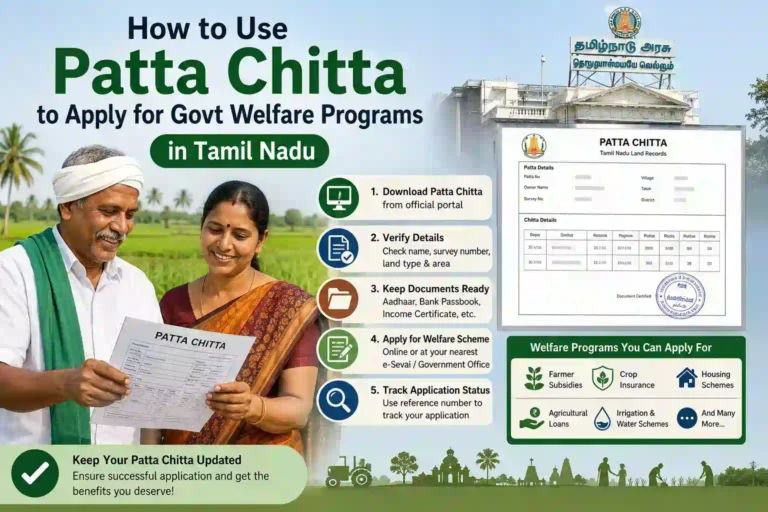
A Patta is an official land ownership document issued by the Revenue Department of Tamil Nadu. It confirms who legally owns a plot. A Chitta records the type of land, wet or dry, and links to your survey number.
Together, the Patta and Chitta form your core land records under the Tamil Nadu Land Records system. They are maintained by the Taluk Office under the District Collector.
Your property tax record, on the other hand, is maintained by the local body. This could be a Corporation, Municipality, or Town Panchayat. In Chennai, it falls under the Greater Chennai Corporation (GCC). In areas like Tambaram, Sholinganallur, or Perungalathur, it falls under respective municipalities or town panchayats.
These two systems, Revenue Department and Local Body, run separately. That is where the trouble starts.
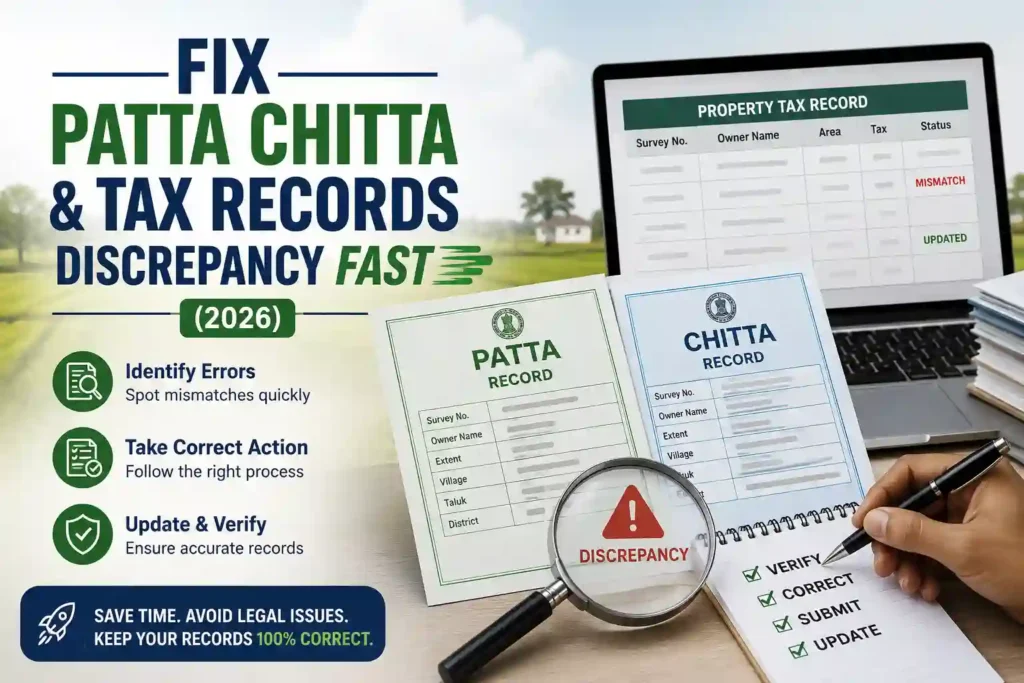
Common Causes of Patta Chitta and Tax Record Mismatch
Before you fix the problem, understand why it happened. Most discrepancies come from one of these reasons:
1. Name Spelling Errors Your name appears as “Murugan” in the Patta but “Murughan” in the tax record. Small errors cause big legal headaches.
2. Survey Number Mismatch After subdivisions or re-surveys, old survey numbers get split. The tax record still shows the old number. The Patta shows the new one.
3. Mutation Not Updated You bought the land. You got the Patta transferred. But the local body still shows the previous owner’s name in the tax record because mutation was never applied there.
4. Extent Discrepancy Patta shows 2400 sq ft. Tax record shows 2000 sq ft. This happens during reassessment or when partial land was added to a layout without updating both records.
5. Old Chitta Entries vs New Classification Agricultural land near OMR or GST Road gets converted for residential use. The Chitta still calls it “Dry Land.” The Corporation has already assessed it as a residential plot. These two don’t match.
6. Digitization Errors Tamil Nadu rolled out its eServices portal (https://eservices.tn.gov.in) and TNREGINET over several years. Manual records were digitized. Errors crept in during data entry.
Why You Must Fix This Before Selling or Getting a Loan
Banks like SBI, HDFC, and Canara Bank now routinely cross-check Patta Chitta with municipal tax records before approving home loans. If they find a Patta Chitta tax records discrepancy, they put your application on hold.
Buyers and their lawyers do title searches that now include both Revenue and Corporation records. A mismatch raises red flags. It implies disputed ownership, illegal subdivision, or unauthorized construction.
If you plan to sell property near Velachery, Chrompet, or anywhere along the Chennai Metropolitan Area, fix this first. Delays cost money and deals.
Step-by-Step: How to Fix a Patta Chitta and Tax Records Discrepancy
Step 1: Collect All Original Documents
Start by gathering:
- Sale deed registered at the Sub-Registrar Office
- Current Patta copy (download from eServices portal or collect from Taluk Office)
- Chitta extract/ Patta Chitta tax records discrepancy
- Property tax receipt (latest) from the local body
- Encumbrance Certificate (EC) from TNREGINET
- Survey sketch from the Survey and Land Records Department
Check each document carefully. Mark every mismatch you find, even small ones.
Step 2: Identify Whether the Error Is in Revenue Records or Local Body Records
This is critical. Many people apply for corrections in the wrong office and waste months.
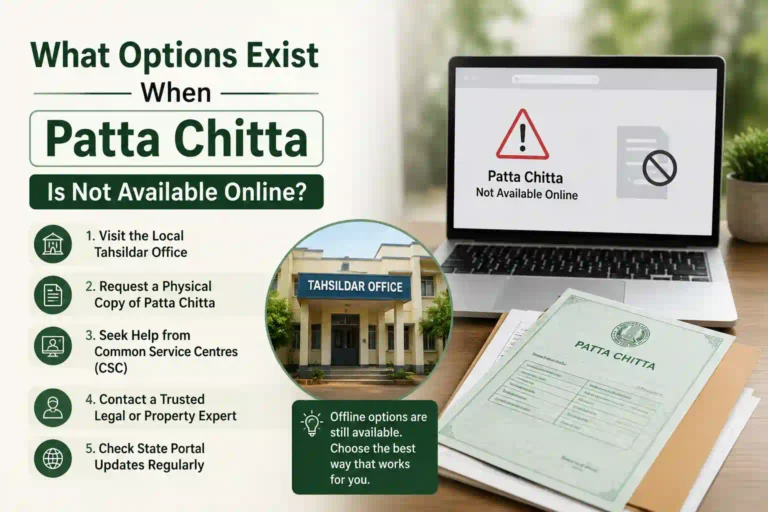
If your Patta or Chitta has the error, go to the Taluk Office under the Revenue Department.
If your property tax record has the error, go to the Revenue Section of your Corporation, Municipality, or Panchayat.
Sometimes both records need correction. In that case, you work both tracks simultaneously.
Step 3: File a Petition at the Taluk Office for Patta Correction
If the Patta has a name error, extent issue, or wrong survey number, file a written petition at the concerned Taluk Office. The Tahsildar will assign a Field Investigator (VAO Verification) who visits the site and verifies the physical boundaries.
Supporting documents to attach:
- Copy of sale deed
- Copy of Encumbrance Certificate
- Aadhaar of the petitioner
- FMB sketch (Field Measurement Book)
- Passport-size photos
- Patta Chitta tax records discrepancy
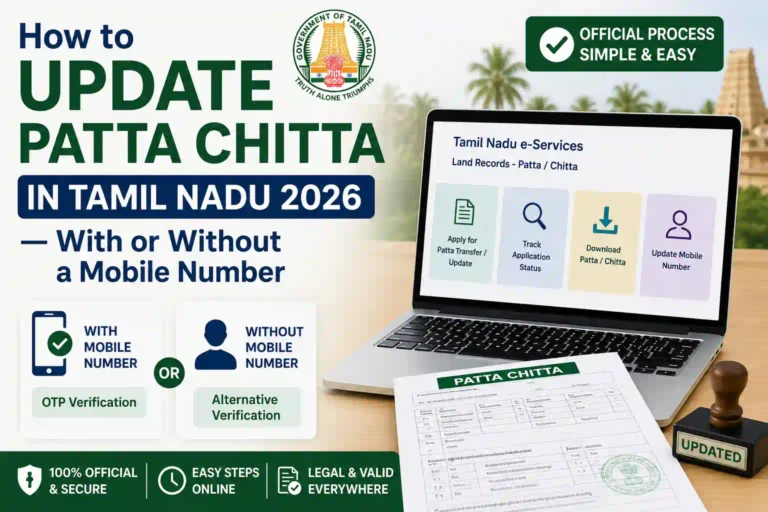
After verification, the Tahsildar passes an order correcting the Patta. This typically takes 30 to 60 working days. In Kancheepuram and Chengalpattu districts, some Taluk Offices have started accepting online petitions through https://eservices.tn.gov.in.
Step 4: Get Mutation Done at the Local Body Office
If the property tax record still shows a previous owner’s name, you need to apply for Name Transfer in the local body. Patta Chitta tax records discrepancy. This is called a Mutation Application or Khata Transfer in other states.
Walk into the Revenue Section of your Ward Office with:
- Copy of the registered sale deed
- Patta copy with your name
- Latest property tax paid receipt
- Application form from the office
- Aadhaar copy
In Chennai, the Greater Chennai Corporation allows online submissions at https://chennaicorporation.gov.in. Residents near Adyar, Kodambakkam, or Anna Nagar can track the application using their Zone number and Ward number online.
For municipalities like Tambaram, Avadi, or Pallavaram, visit the respective office. Most now accept digital applications, but follow-up in person speeds things up.
Step 5: Match Survey Number After Re-Survey Corrections
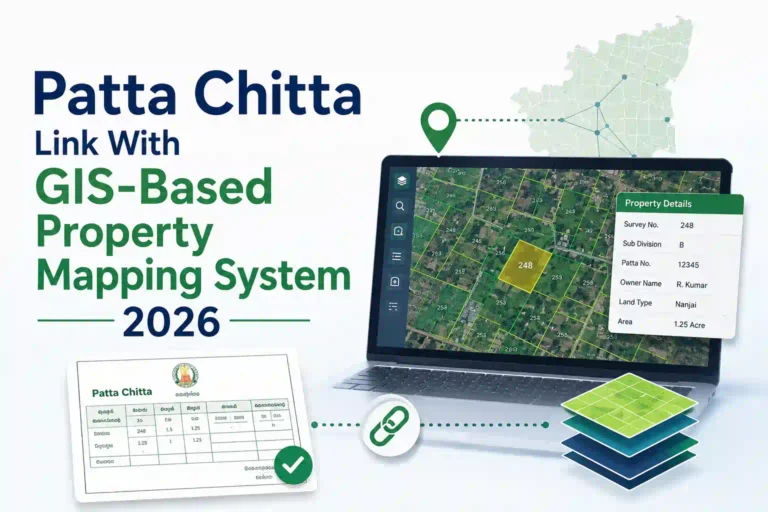
If your survey number changed due to a village re-survey by TNSLAS (Tamil Nadu Survey and Land Records Administration System), get the updated FMB sketch. Then:
- Approach the District Survey Office (DSO) in your district.
- Request a Patta amendment showing the new survey number.
- Submit the updated Patta to the local body for tax record amendment.
- Patta Chitta tax records discrepancy
This is common in peri-urban areas near Guduvanchery, Sriperumbudur, and Oragadam where rapid industrial and residential development has triggered multiple re-surveys.
Step 6: Apply for Extent Correction If Square Footage Differs
An extent mismatch needs a site inspection. You will need to hire a licensed surveyor to prepare a fresh survey sketch. Then:
- File a petition at the Taluk Office with the fresh sketch.
- Attach original sale deed and old FMB.
- Wait for VAO and Revenue Inspector joint inspection.
- After Tahsildar order, update the Patta extent.
- Submit updated Patta to local body for tax reassessment.
Note: Tax may increase or decrease based on the corrected extent. This is a legal requirement, not optional.
Step 7: Update Chitta for Land Use Classification Change
If your land was converted from agricultural to residential or commercial use, verify that the Chitta records the correct classification. Applications for land use conversion go through the Collector’s Office under the Tamil Nadu Agricultural Land (Conversion for Non-Agricultural Purposes) Act, 2014.
Once conversion is approved, the Chitta is updated accordingly. Take this updated Chitta to the local body so the tax assessment reflects the right property category.
How Long Does the Entire Process Take?
There is no single answer. A simple name spelling correction in the local body can take 2 to 4 weeks. A survey number correction involving fresh site inspection can take 3 to 6 months.
If your case gets referred to the Revenue Divisional Officer (RDO) or District Collector for higher-level correction, add another 2 to 4 months.
Do not wait until you are closing a deal. Start the correction process the moment you notice the mismatch.
How to Check Your Patta Chitta Online in Tamil Nadu
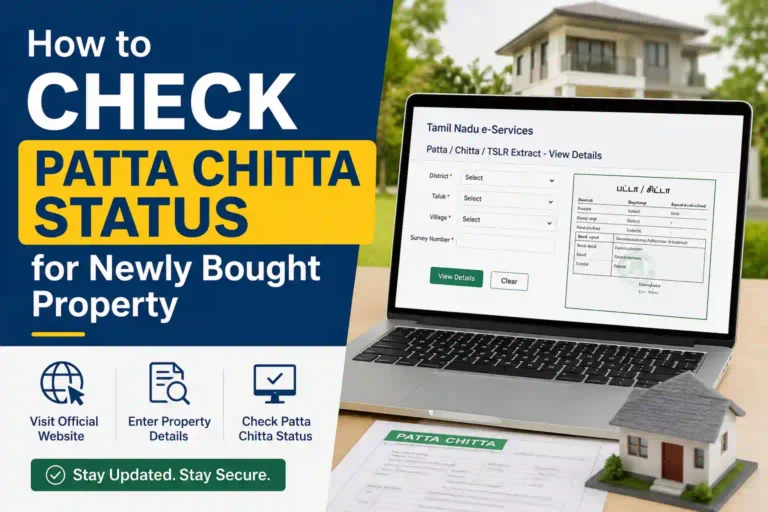
Tamil Nadu has digitized most land records. You can check your current Patta Chitta status at:
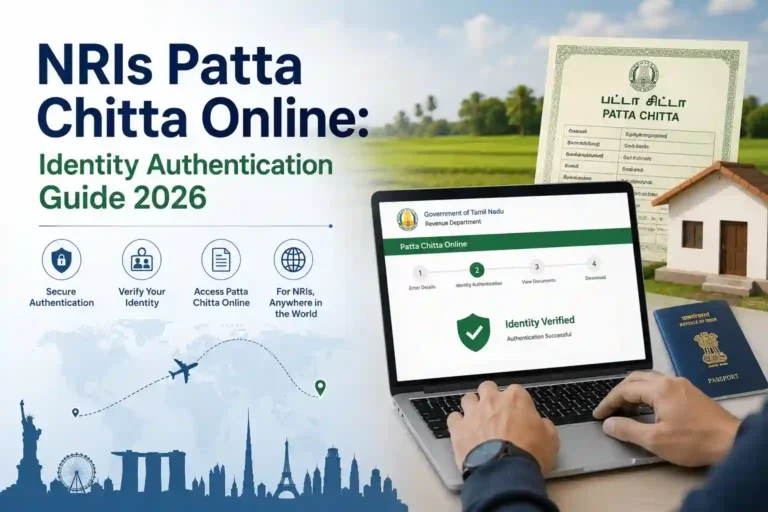
eServices Portal: https://eservices.tn.gov.in Choose “View Patta and FMB” under Land Records. Enter your district, Taluk, Village, and Survey number.
TNREGINET: https://tnreginet.gov.in Check Encumbrance Certificates and registration history here.
GCC Property Tax Portal: https://chennaicorporation.gov.in Search by door number, street name, or assessment number.
Cross-check these records before approaching any government office. Print the current status. This serves as your baseline.
What If Both Offices Deny Your Petition?
This happens. Revenue offices reject petitions citing incomplete documents. Local bodies reject corrections saying they need prior Revenue Department approval first.
In that case, file a Right to Information (RTI) application under the RTI Act, 2005 with both offices. Ask for the status of your application, the officer handling it, and the expected timeline. RTI responses are legally mandated within 30 days. This creates accountability and often unblocks stuck applications.
If the rejection is arbitrary or unjust, you can appeal to the District Collector under the Tamil Nadu Revenue Recovery Act or approach the Revenue Divisional Officer. For local body issues, the Director of Municipal Administration (DMA) handles second-level appeals.
In extreme cases where your ownership itself is being disputed, consult a civil lawyer. The Civil Court in your jurisdiction has powers to direct Revenue officials to correct records under Order 7 Rule 1 CPC.
Documents You Need to Keep Ready at All Times
Every property owner in Tamil Nadu should maintain a physical and digital copy of:
- Registered sale deed
- Current Patta
- Chitta extract
- FMB sketch
- Latest EC (not older than 6 months for transactions)
- Latest property tax paid receipt
- Aadhar and PAN of owner
- Building plan approval (if constructed)
- Patta Chitta tax records discrepancy
Store these in a dedicated folder. Scan and upload to Google Drive or any secure cloud. Losing documents and requesting duplicates adds weeks to your correction process.
Key Government Contacts for Tamil Nadu Land Records
Revenue Department, Tamil Nadu: https://tn.gov.in/department/1
TNSLAS (Survey Department): https://tnlrs.tn.gov.in
Greater Chennai Corporation: https://chennaicorporation.gov.in
CMDA (Chennai Metropolitan Development Authority): https://cmdachennai.gov.in
Inspector General of Registration, Tamil Nadu: https://tnreginet.gov.in
These are primary sources. Patta Chitta tax records discrepancy. Visit in person whenever possible. Online portals help but human follow-up resolves faster.
Final Word: Don’t Let a Paper Error Cost You Your Property
A Patta Chitta tax records discrepancy does not mean you don’t own the land. But it does create legal uncertainty. Banks, buyers, and courts look at this closely.
The correction process in Tamil Nadu has improved over the last five years. Most Taluk Offices have dedicated counters for land record corrections. Major Corporation zones in Chennai, including Adyar, Perambur, and Tondiarpet, have online tracking. Use them.
Start early. Gather documents. File with both the Revenue Department and local body simultaneously when both need correction. Follow up every two weeks. Keep all receipts and acknowledgment slips.
Your land is your asset. Keep the records clean and matching.
Based on Tamil Nadu Revenue Department procedures and the Tamil Nadu Land Records Digitization Initiative. For complex legal disputes, always consult a registered civil advocate with land record expertise.