Can Banks Verify Patta Chitta Records Directly Without Docs?
Walk into any bank near Anna Salai, Trichy Road, or even a small branch office on Nehru Street in Coimbatore, and ask for an agricultural or plot loan. The first thing the officer asks for is your Patta and Chitta documents.
But here is what most people do not know. Banks Verify Patta Chitta Records
Banks in Tamil Nadu now have the ability to cross-check land ownership data directly through the Tamil Nadu government’s online portal. They do not always need a physical paper copy from you to start the verification process.
So can banks do Patta Chitta verification without documents from the applicant? Let us break this down in plain language.
What Are Patta and Chitta Records?
Before we talk about bank access, let us quickly understand what these records are.
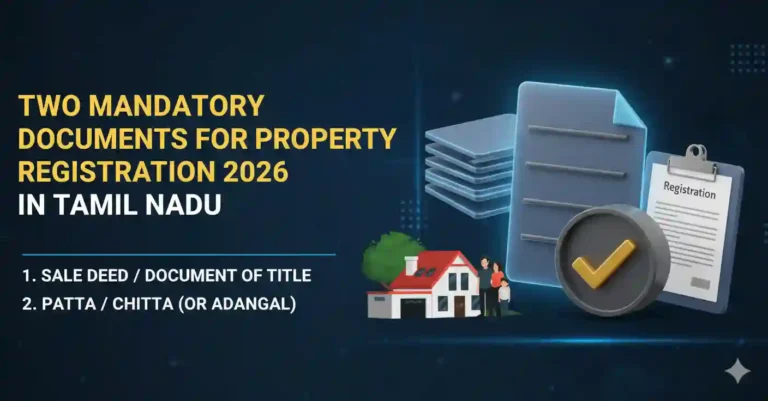
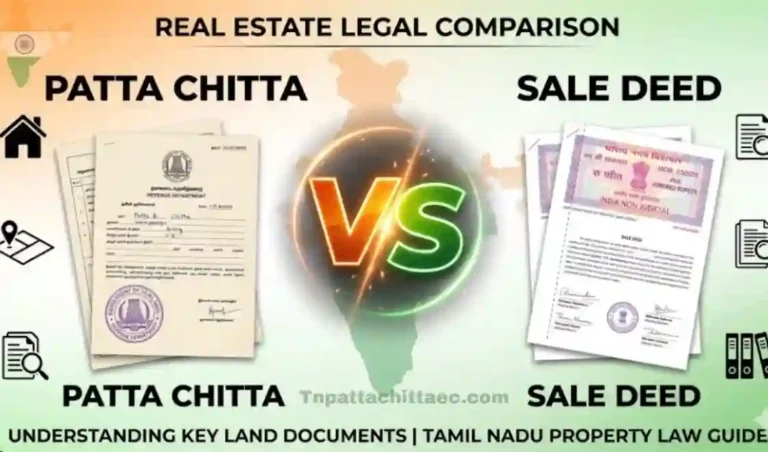
Patta is a legal document issued by the Tamil Nadu Revenue Department. It proves who owns a piece of land. It carries the owner’s name, survey number, land area, and land classification details. The document is registered under the Taluk office of the district.
Chitta is a companion register. It shows the nature of the land, whether it is wetland (Nanjai) or dry land (Punjai). It also shows the extent of the land and land tax details.
Together, they form the backbone of land ownership proof in Tamil Nadu. Whether you are near Usilampatti in Madurai district or in a village off the Villupuram bypass road, these records matter for every land transaction.
Why Banks Need Patta Chitta for Loans
When someone applies for an agricultural loan, a home loan on agricultural land, or a Loan Against Property (LAP), the bank must verify land ownership. Banks Verify Patta Chitta. This is mandatory under RBI guidelines for secured lending.
Banks need to confirm three things: Banks Verify Patta Chitta
The land belongs to the applicant. The land is free from disputes. The land classification matches the loan purpose.
Patta Chitta verification covers all three directly. Without it, a bank cannot disburse funds against land as collateral.
The Tamil Nadu Government’s Online Land Record Portal
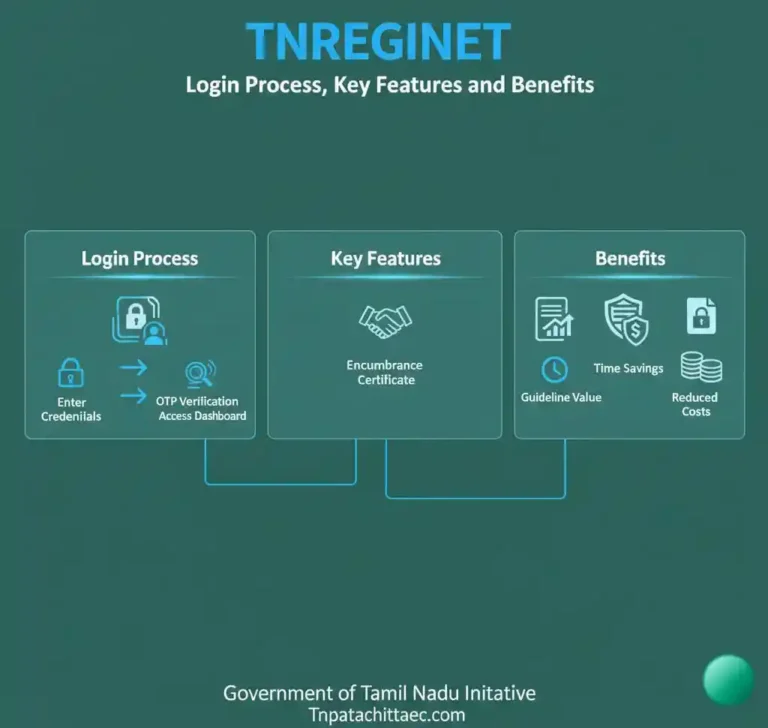
The Tamil Nadu government launched the eServices portal at tnreginet.gov.in and the land records portal at eservices.tn.gov.in to make land data publicly accessible.
Through the Patta Chitta online portal, anyone, including bank officers, can search for land records using:
The district name. The taluk name. The village name. The survey number or subdivision number.
This means a loan officer sitting in a branch on Gandhi Road in Salem or near the Rajiv Gandhi Salai corridor in Chennai can pull up land record data without asking you to bring a physical document first.
This shift happened as part of Tamil Nadu’s broader digital governance push under the e-Governance Mission Mode Projects.
Can Banks Directly Verify Patta Chitta Without Physical Documents?
Yes, banks can initiate Patta Chitta verification by banks through the official state portal. However, there are important conditions to understand.
What banks can do online:
Banks can check current Patta holder name. They can verify survey number details and land extent. They can check the nature of the land, wet or dry. They can access the FMB (Field Measurement Book) sketch in some districts.
What still requires official documents:
Banks need a certified copy of the Patta for the final loan file. Revenue records showing tax payment history still require physical documents. Encumbrance certificates from the Sub Registrar Office must be obtained separately.
So to be precise, Patta Chitta verification by banks can happen digitally during the initial screening phase. Banks Verify Patta Chitta. For final loan sanction, certified copies remain mandatory as per banking norms.
How the Online Verification Process Works
Here is what actually happens inside a bank when they verify your land records.
The loan officer opens the Tamil Nadu e-Services portal. They enter your district, taluk, and village details. They input your survey number from the application form you submitted. The system shows the current Patta details registered under that survey number.
The officer then matches the Patta holder name against your KYC documents. If there is a mismatch or missing data, they flag it before even asking you for documents.
This digital step saves time for both the borrower and the bank. It catches errors early. Many public sector banks and cooperative banks near areas like Tirunelveli Town, Thanjavur Delta zones, and Madurai East Taluk now use this as the first step in their land appraisal checklist.
Which Banks Access the Portal Directly?
Not all banks operate with the same process. Here is a general picture. Banks Verify Patta Chitta.
Public Sector Banks like State Bank of India, Canara Bank, and Indian Bank have internal systems linked with land record databases in some states. Their field officers routinely verify data online before site visits.
Cooperative Banks near agricultural belts, like those operating near Karur, Erode weavers hub, and the Cauvery Delta zone, rely heavily on Patta Chitta records for Kisan Credit Card and crop loan processing.
Private Banks like HDFC Bank, ICICI Bank, and Axis Bank use registered valuer reports that also involve checking Patta data through the portal or through their empanelled legal teams.
RRBs (Regional Rural Banks) serving districts like Virudhunagar, Thoothukudi, and Namakkal conduct their own field verification but also cross check with the portal.
What About Patta Chitta Verification by Banks for Plot Loans?
For plot loans in urban or semi-urban areas, the process involves additional checks. If your plot is near a developing corridor like the OMR Stretch in Chennai, the SIPCOT zone in Hosur, or near Coimbatore Airport Road, banks will also verify DTCP and CMDA approvals along with Patta.
In such cases, the bank’s legal team pulls Patta data online to confirm the survey number, then cross-references it with the layout approval document you provide. Patta Chitta verification by banks becomes one piece of a larger due diligence puzzle.
Common Issues During Bank Land Verification
Even with online access, problems come up. Banks Verify Patta Chitta. Here are the most common ones.
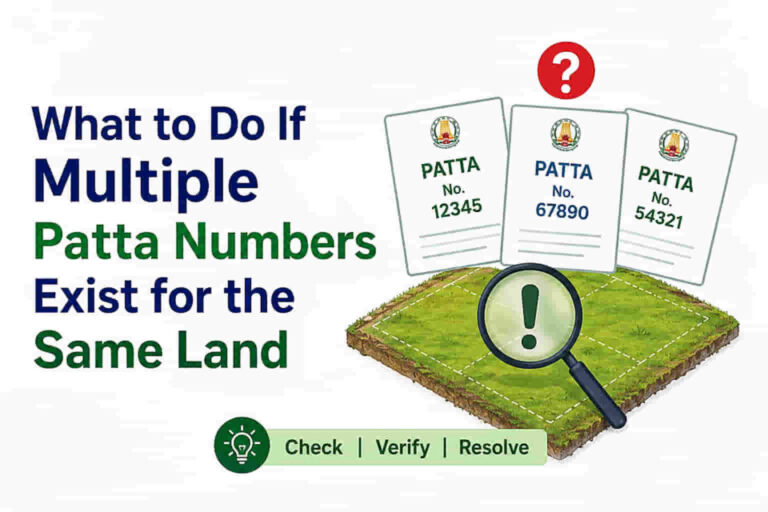
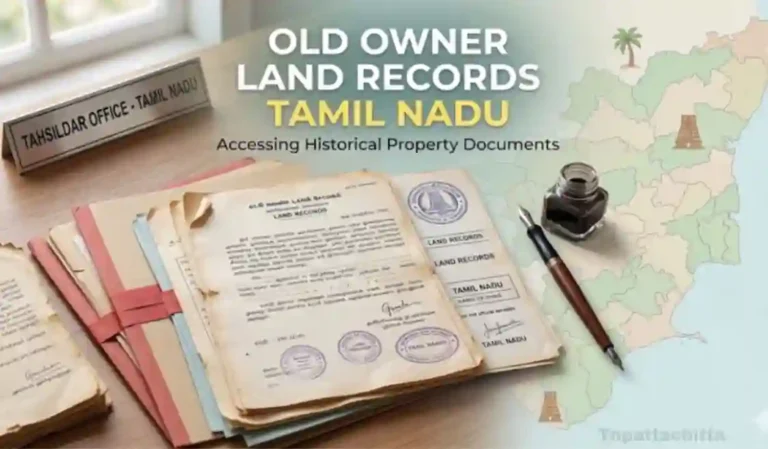
Name mismatch. The Patta may show the land in a parent or grandparent’s name. The applicant must provide a legal heirship certificate or a settlement deed.
Survey number split. In many villages, original survey numbers have been subdivided over generations. Banks need subdivision records from the Taluk office.
Poramboke land classification. If a portion of the land is classified as government poramboke in the Chitta records, banks will not fund that portion.
FMB mismatch. The physical boundary and the FMB sketch on record sometimes differ, especially in old settlements near river banks or in coastal villages.
If any of these issues appear during Patta Chitta verification by banks, the loan gets held up until the borrower resolves the discrepancy at the Tahsildar’s office.
How to Speed Up the Process
If you want your loan to move fast, come prepared. Here is what helps.
Get a fresh Patta printout from the e-Services portal yourself before applying. It shows the bank officer you already know your land details. Carry the survey number, subdivision number, and village patta number in writing. Make sure your name in Patta matches your Aadhaar exactly. If it does not, get a gazette notification or affidavit ready. Request an Encumbrance Certificate (EC) from the Sub Registrar Office for the last 15 to 30 years. Banks need this too.
Doing this homework reduces back and forth. It shows the bank that the documents are clean and the ownership is clear.
Is the Online Data Always Accurate?
This is an honest question. The short answer is: mostly yes, but not always.
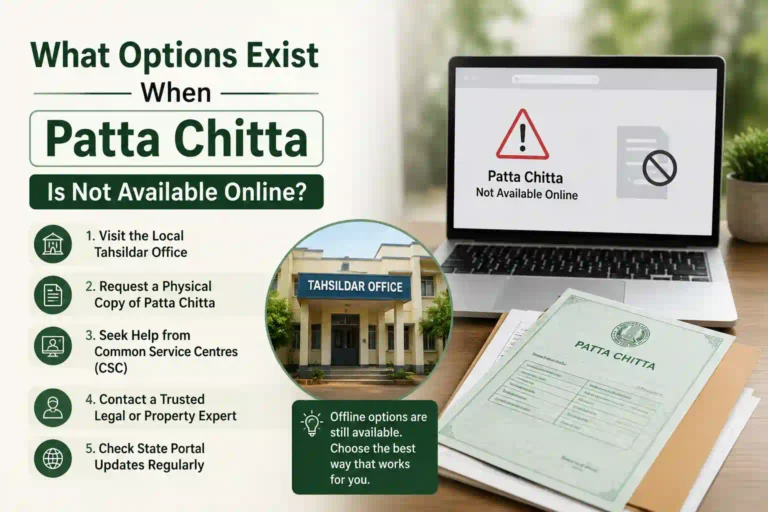
Tamil Nadu’s land records digitization has been strong, especially after the state government’s push under the Tamil Nadu e-Governance Agency (TNeGA). However, some rural taluks still have incomplete data entry. In remote pockets near hilly districts like Dharmapuri, The Nilgiris belt, or parts of Ramanathapuram, records may not reflect the latest mutations.
In such cases, a physical Patta with mutation entries from the Village Administrative Officer (VAO) becomes essential. Banks Verify Patta Chitta. Banks working in these areas know this and insist on physical records as primary evidence.
What Happens After Bank Verification?
Once Patta Chitta verification by banks confirms clean ownership, the bank moves to property valuation. A bank-empanelled valuer visits the land, measures it, and prepares a valuation report.
The valuation report, along with verified Patta Chitta, EC, and legal opinion, forms the full credit appraisal file. Only after all these components are cleared does the bank proceed to loan sanction.
Key Takeaway for Borrowers
Banks in Tamil Nadu can and do verify Patta Chitta records through the official state portal without waiting for you to submit documents. This digital access speeds up initial checks and flags problems early.
However, for formal loan processing, certified Patta copies, EC, and other supporting documents remain required. Banks Verify Patta Chitta. No bank will disburse a secured loan based on portal screenshots alone.
The best move for any borrower near Madurai, Chennai, Trichy, Coimbatore, Salem, or any district across Tamil Nadu is to walk in with clean, updated documents. Know your survey number. Know your land classification. And check the e-Services portal before your bank does.
That puts you ahead of 90% of loan applicants and cuts weeks off your loan processing time.
Final Word | Banks Verify Patta Chitta Records
Patta Chitta verification by banks is now partly digital, partly traditional. The online portal gives banks faster visibility. But the physical paperwork still matters for legal compliance. Understanding this balance helps you approach your lender with confidence and clarity.
If you are unsure about your records, visit your nearest Taluk office, ask the VAO, or use the Tamil Nadu e-Services portal to pull your data right now. Your land records are public. Knowing them is your right.
References:
Tamil Nadu e-Services Portal: https://eservices.tn.gov.in
TN Registration Department: https://www.tnreginet.gov.in
Reserve Bank of India Guidelines on Land Valuation for Secured Loans: https://www.rbi.org.in
Tamil Nadu e-Governance Agency (TNeGA): https://tnega.tn.gov.in